
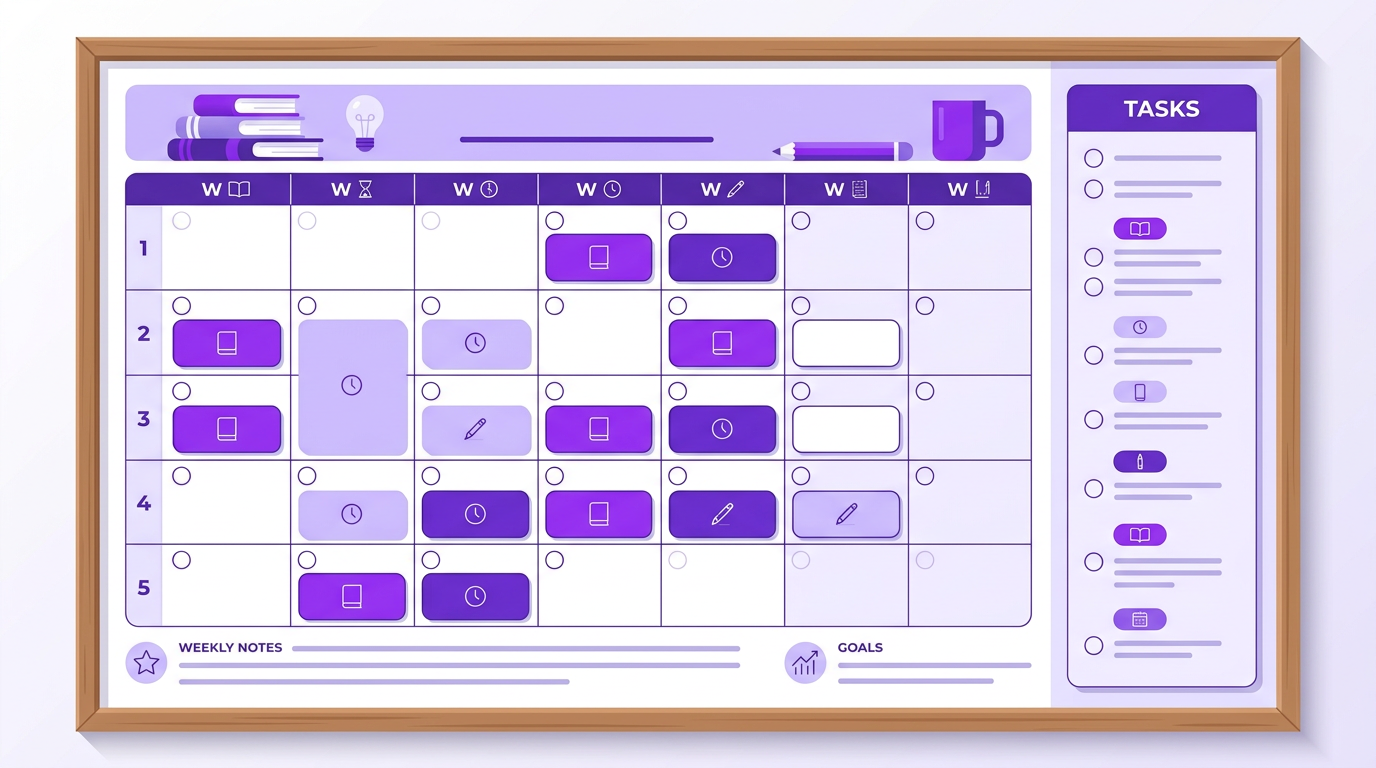
Starting YKS (the Turkish university entrance exam) preparation without a TYT study plan is like driving without a map. Every year, thousands of students say "I study a lot but my score is not going up" — yet the problem is rarely the number of hours; it is that those hours follow no plan. September is the perfect time for students targeting the 2027 exam to build their schedule: when topics are still ahead of you, a structured calendar produces confidence instead of panic on exam day.
This guide answers how to make a TYT study plan step by step, offers a sample weekly schedule, and shares tactics that keep a plan alive for months. TYT (Temel Yeterlilik Testi) is the first session of the YKS exam that Turkish high-school seniors take for university admission, and the plan below works for both current 12th graders and gap-year (mezun) students.
Success in TYT is not measured by how many hours you study each day, but by how well you plan those hours.
How to Make a TYT Study Plan: A 6-Step Method
Finding ready-made plans online is easy; designing one that fits your own situation is the real skill. Follow these six steps in order:
- Measure your current level. Before planning, take a full timed TYT practice test and record your Turkish, math, social sciences and science scores separately. A goal set without knowing where you stand produces a plan built on guesses.
- Set a concrete target and count your weeks. Choose a specific goal such as "80 net on TYT" and calculate how many weeks remain until the exam. When dividing time between subjects, give more hours to your weakest area.
- Balance the subjects correctly. TYT consists of 40 Turkish, 40 math, 20 social studies and 20 science questions. The two 40-question subjects must occupy the largest share of your program — but dropping social studies and science entirely also costs points.
- Use time blocks, not topic lists. Instead of "I will finish 3 topics", write concrete blocks: "19:00-20:30, math word problems". Clear time frames defeat procrastination.
- Schedule review and mock-exam days. Every weekly plan needs a review block and a full TYT practice exam on the weekend. If the balance between new material and revision is lost, what you learn will fade quickly.
- Leave room for flexibility. Do not fill your calendar minute by minute; keep 30-45 minutes of buffer each day. Small setbacks should bend the plan, not break it.
Sample Weekly TYT Study Schedule
For a student still attending school, this pattern — 3-4 hours on weekdays with a heavier weekend — is a solid starting point:
- Weekday evenings (2 blocks): First block 60-75 minutes on a main subject (math or Turkish), short break, second block 45-60 minutes on a secondary subject (science or social studies)
- Friday evening: Short review of the week's mistakes and newly learned topics
- Saturday: One full 165-minute TYT practice exam under real exam conditions + analysis session
- Sunday: Study the weak topics revealed by the analysis + write next week's plan
Run this routine for 3-4 weeks, then adjust times and subject shares based on how your scores move. A study plan is a living tool, not a contract — if it is not moving you forward, change it.
4 Tactics That Make a TYT Study Plan Sustainable
Building the plan is easy; the real challenge is still following it in February. These habits keep you going:
- Keep a weekly goal card: Every Monday write three concrete targets ("analyze 3 practice exams", "solve 200 math problems"), and check them off on Sunday. Visible progress is the strongest source of motivation.
- Make your study environment repeatable: The same desk, the same hours and a phone left in another room train your brain to enter "study mode" faster.
- Track your data: Record practice-exam scores, questions solved and mistake topics in a simple table. When decisions are based on data rather than feelings, the plan actually carries you forward.
- Schedule rest and sleep: Rest is a task in your plan, not a luxury. Without 7-8 hours of sleep and short breaks between blocks, no calendar works in the long run.
Build Your TYT Study Plan on Data with BenimRobot
The weakest link in most TYT study plans is tracking: how far have you progressed in each topic, and which question types slow you down? With BenimRobot's AI question generator you can create as many questions as you need for every topic, and its optical answer-sheet reader analyzes your practice exams within minutes, showing your mistakes topic by topic. Instead of updating your weekly plan by guesswork, you update it with the real gaps revealed by your own exam analysis.
TYT Study Plan FAQ
When should I start TYT preparation?
Experts suggest starting in the summer after 11th grade, but students who begin in September of 12th grade still reach their targets with a disciplined plan. What matters is not the starting month but building the weekly mock-and-review cycle from day one. Late starters can close the gap by compressing the topic scan and shifting to exam-heavy practice earlier.
How many hours a day should a TYT study plan include?
For a 12th grader still attending school, 3-4 focused hours a day is realistic; gap-year (mezun) students can aim for 5-6. Quality beats quantity: students who work in 25-50 minute focus blocks with short breaks learn more than those who sit for hours. Complete the week with a Saturday mock exam and its analysis.
I cannot stick to my TYT study plan. What should I do?
Find out where the plan breaks: are the days overloaded, are disliked subjects piling up, or are breaks unstructured? Make the plan 70 percent realistic — reduce weekly hours but raise consistency. If a block keeps failing for two weeks, move that subject to the time of day when your energy is highest.
Conclusion: A Good TYT Study Plan Is a System You Keep Updating
The answer to how to make a TYT study plan fits into one sentence: measure your level, balance the subjects, write time blocks, fix review and mock days, and update everything weekly with data. Apply these six steps today and produce your first weekly plan — so that in June 2027 you enjoy the calm of having started early instead of regretting a planless year.